Biography
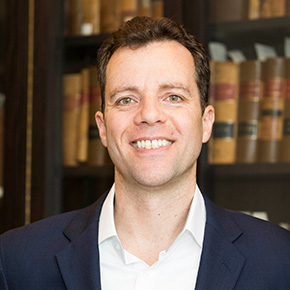
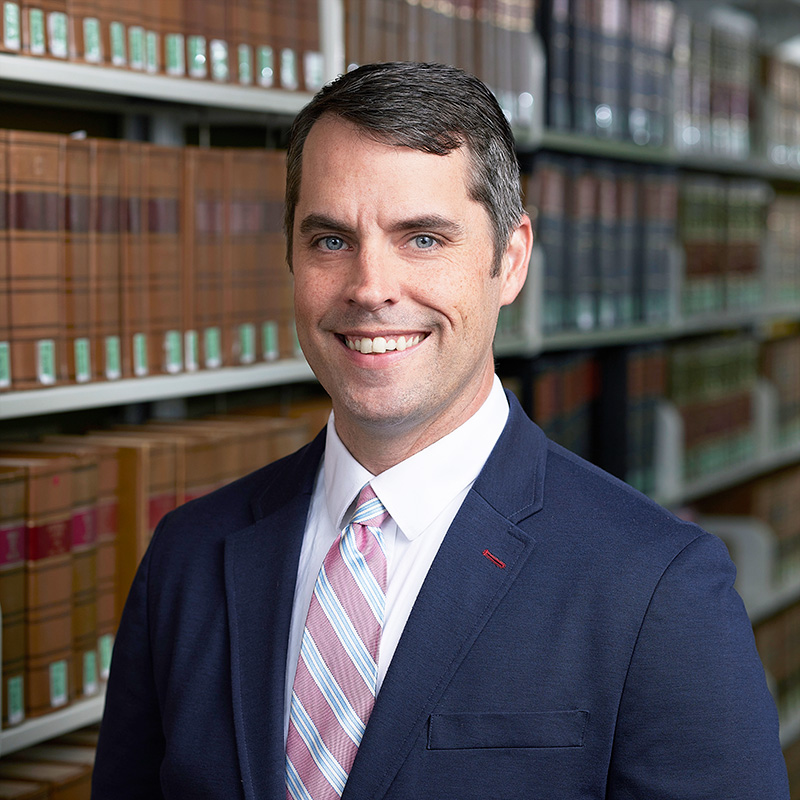
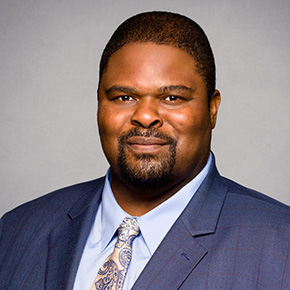
Teemu Ruskola

Professor of Law
Areas of Expertise
Contracts, Corporations, Chinese Economic and Business Law, Chinese Legal History, Legal Theory
Biography
Prior to joining Emory Law, Teemu Ruskola was professor of law at American University in Washington, D.C. He has been a visiting professor at the Woodrow Wilson School of Public and International Affairs at Princeton University and at Cornell Law School. In 2011-2012, he will be a visiting professor at Georgetown University Law Center.
A graduate of Yale Law School, Professor Ruskola worked as an associate at Cleary Gottlieb Steen & Hamilton, in New York and Hong Kong. Thereafter, he continued his graduate studies in East Asian Studies at Stanford University, where his research focused on the history of commercial regulation in China.
Professor Ruskola's scholarship addresses questions of legal history and theory from multiple perspectives, comparative as well as international, frequently with China as a vantage point. His publications—appearing in the Michigan Law Review, the Stanford Law Review and the UCLA Law Review, among other places—have explored the intersection of corporate and family law in China, the history and politics of Euro-American conceptions of sovereignty in the Asia-Pacific, and China’s historic status as an international legal subject.
Professor Ruskola is the recipient of several national awards, including a fellowship at the Institute for Advanced Study in Princeton, N.J.; a Law and Public Affairs Fellowship at Princeton University; and a Charles A. Ryskamp Research Fellowship with the American Council of Learned Societies. He has taught and lectured widely on Chinese law, comparative law and international law in the United States as well as in Europe, Asia, South America and Australia.
Professor Ruskola is co-editor (with Ugo Mattei and Antonio Gidi) of Schlesinger’s Comparative Law (7th ed., Foundation Press). He currently is completing two new book projects. Legal Orientalism: China, the United States, and Modern Law is a study of “legal Orientalism” as a structure of knowledge for understanding Chinese law as well as a historical practice in the context of U.S. extraterritorial jurisdiction in China from 1844 to 1943. China, For Example: China and the Making of Modern International Law analyzes the history of the introduction of Western international law into China, and the implications of that process for the theory and politics of international law. Professor Ruskola also is co-editor (with David L. Eng and Shuang Shen) of a forthcoming special volume of the journal Social Text, titled “China and the Human,” an interdisciplinary examination of Chinese, Western and transnational conceptions of the human as a legal, political, ethical, medical and anthropological subject.
Professor Ruskola is an elected member of the International Academy of Comparative Law as well as a member of the Executive Editorial Board of the American Journal of Comparative Law.
Education: AB, Stanford University, 1990; Inter-University Program for Chinese Language Studies, Taipei, 1992; JD, Yale Law School, 1995; AM, Stanford University, 1999.
Publications
Teemu Ruskola
Publications
Textbooks
SCHLESINGER’S COMPARATIVE LAW: CASES, TEXT, MATERIALS (with Ugo Mattei & Antonio Gidi, 7th ed., Foundation Press 2009).
Articles and Book Chapters
Where Is Asia? When Is Asia? How to Get Beyond Asian Values, 43 UC DAVIS LAW REVIEW __ (forthcoming 2010).
Raping Like a State, 57 UCLA LAW REVIEW __ (forthcoming 2010).
The East Asian Legal Tradition, in CAMBRIDGE COMPANION TO COMPARATIVE LAW (Mauro Bussani & Ugo Mattei eds. forthcoming 2010).
China, 100 SOCIAL TEXT 63 (with David L. Eng, 2009).
Colonialism Without Colonies: On the Extraterritorial Jurisprudence of the U.S. Court for China, 71 LAW & CONTEMPORARY PROBLEMS 217 (2008).
Canton Is Not Boston: The Invention of American Imperial Sovereignty, 57 AMERICAN QUARTERLY 859 (2005), reprinted in LEGAL BORDERLANDS: LAW AND THE CONSTRUCTION OF AMERICAN BORDERS (Mary L. Dudiak & Leti Volpp eds. 2006).
Gay Rights vs. Queer Theory: What’s Left of Sodomy After Lawrence v. Texas?, 84-85 SOCIAL TEXT 235 (2005).

Home Economics: What Is the Difference Between a Family and a Corporation?, in RETHINKING COMMODIFICATION 324 (Joan Williams & Martha Ertman eds. 2005).
Legal Orientalism, 101 MICHIGAN LAW REVIEW 179 (2002), reprinted in 12 ZEITSCHRIFT FÜR CHINESISCHES RECHT 269 (2005) and in FOUCAULT AND LAW (Peter Fitzpatrick & Ben Golder eds., forthcoming 2010).
Law Without Law, or Is “Chinese Law” an Oxymoron?, 11 WILLIAM &MARY BILL OF RIGHTS JOURNAL 655 (2003).
Conceptualizing Corporations and Kinship: Comparative Law and Development Theory in a Chinese Perspective, 52 STANFORD LAW REVIEW 1599 (2000).
The Legal Construction of the Fantasy That Gay and Lesbian Youth Do Not Exist, 8 YALE JOURNAL OF LAW AND FEMINISM 269 (1996).
Law, Sexual Morality, and Gender Equality in Qing and Communist China, 103 YALE LAW JOURNAL 2531 (1994).
Moral Choice in the Confucian Analects: A Way Without a Crossroads?, 19 JOURNAL OF CHINESE PHILOSOPHY 285 (1992).
Work-in-Progress
China, For Example: China in the Making of Modern International Law. A book-length study of the introduction of Western international law into China, and its implications for the theory and politics of international law.


Media
Teemu Ruskola
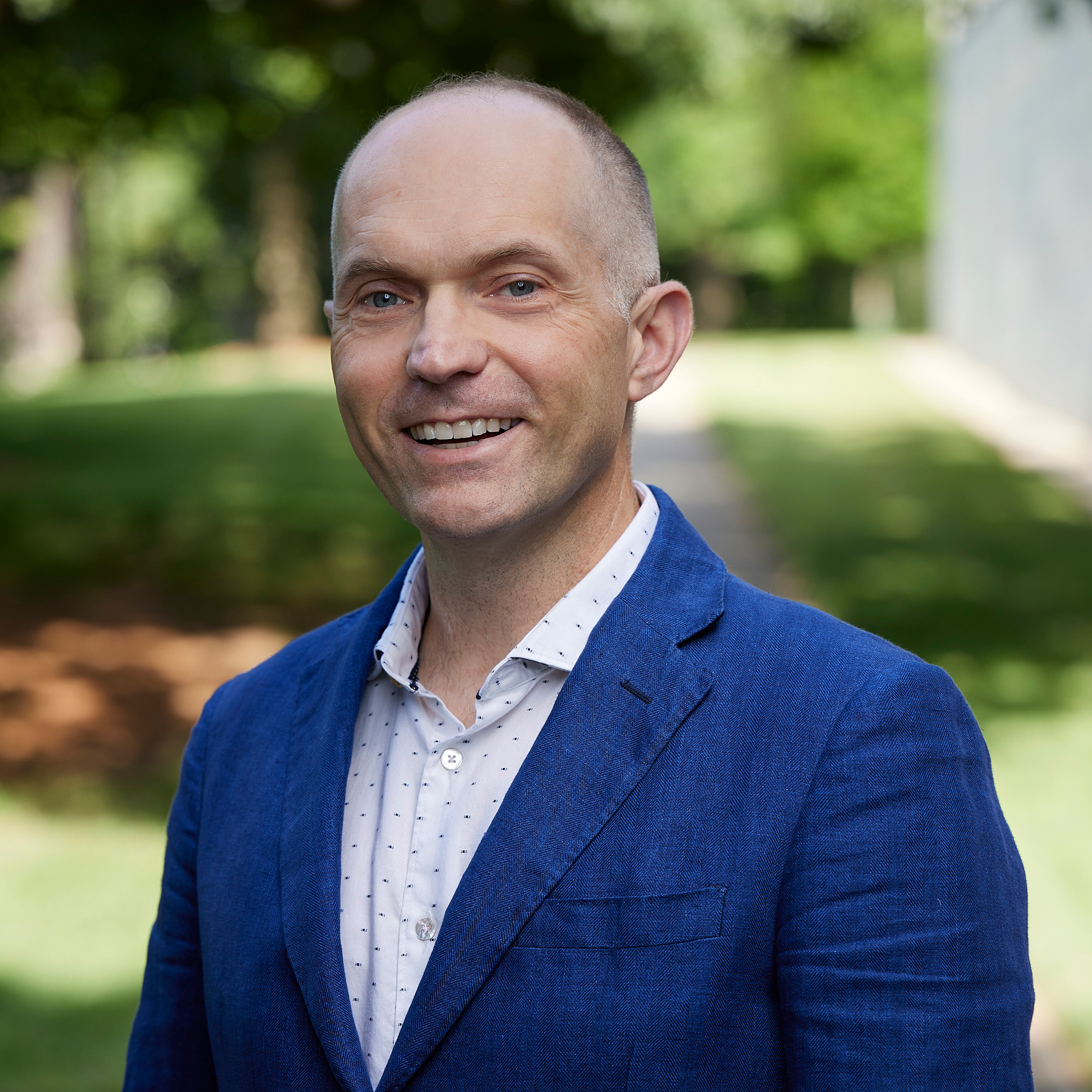
Media for Professor Ruskola
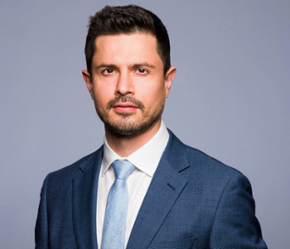
Download a high resolution photo of
Professor Ruskola >>
Right-click in your browser and choose "Save Image As" to save.
About Photo Usage
Before using high resolution images of Emory Law faculty members, please notify the Office of Marketing and Communications at communications(at)law.emory.edu. All photos are copyrighted by Emory University School of Law. Where possible, please include a caption with or near the image that states "Photo Courtesy Emory Law."